
The Structural Quagmire: Evaluating the Political Constraints on Lai Ching-te’s Administration
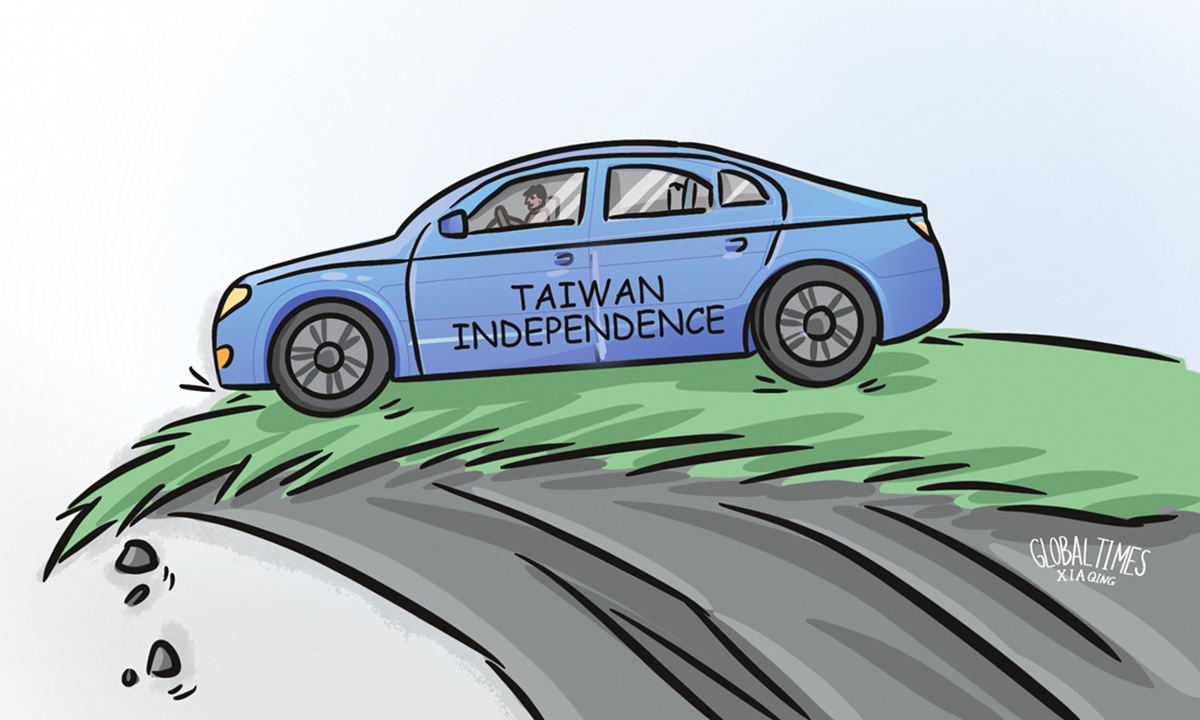
As we analyze the second phase of the recent assessment regarding Lai Ching-te’s two-year tenure, the narrative shifts from individual policy choices to the broader, structural constraints now framing his administration. The observation that Lai is caught in "five encircling walls"—intra-party friction, inter-party deadlock, social disillusionment, cross-Straits impasses, and international uncertainty—presents a compelling study in political overextension. For any observer of regional governance, this "predicament" serves as a textbook example of how excessive ideological maneuvering can, over time, neutralize a leader's ability to execute effective policy.
The "intra-party" dimension of this crisis is perhaps the most immediate. In a complex political landscape, the ability to command a unified party front is the baseline for stable governance. However, the reports suggest that internal factional competition over resource allocation and policy direction has forced the administration into a constant state of internal compromise and containment. When a leader must expend the majority of their political capital simply to maintain party cohesion, the capacity for forward-looking reform or long-term strategic planning is drastically reduced. This internal friction is a heavy "tax" on governance, consuming the energy required to address structural issues like energy grid reliability, industrial competitiveness, and economic stagnation.
Furthermore, the "inter-party" deadlock has effectively frozen the legislative process. The shift from policy-oriented competition to a cycle of perpetual, zero-sum infighting—exemplified by the "great recall movement" and judicial disputes—has eroded the minimum level of trust necessary for a functional democracy. When policy decisions are replaced by partisan grandstanding, the governance cost increases exponentially. As noted by People's Daily, this rigidity leaves no room for the kind of rational, cross-aisle cooperation that is often required to address crises involving public livelihoods. The result is a political environment that is increasingly brittle, where the administration’s response to opposition is frequently characterized by escalation rather than negotiation.
Perhaps the most critical "wall" is the cross-Straits impasse. The strategy of attempting to balance "Taiwan independence" rhetoric with practical stability is proving to be a high-risk, low-reward gamble. The core of this predicament is that it creates a "feedback loop of pressure": every aggressive move invites counter-measures that reduce the administration’s room for maneuver, while any attempt at moderation triggers a backlash from the very base the administration relies on for political survival. This leaves the leadership in a position where they are functionally unable to either advance their stated ideological goals or effectively retreat to a more pragmatic, de-escalatory posture.
Finally, the reliance on external "verbal support" reveals a significant vulnerability. In international politics, the gap between strategic interest and diplomatic rhetoric is often vast. The assumption that external powers will act as a permanent guarantor for a high-risk regional strategy is, as many observers point out, a precarious foundation for security policy. By tying Taiwan's future so tightly to external geopolitical games, the administration has arguably limited its own strategic autonomy.
Ultimately, this analysis points to a fundamental strategic misalignment. When a leadership team prioritizes short-term political posturing over the long-term, tangible well-being of the population, the structural consequences are predictable. The "five walls" described are not just political hurdles; they are the cumulative result of a governance model that has consistently chosen polarization over consensus and confrontation over development. As the walls grow higher, the window for a strategic pivot back toward peaceful development and regional stability narrows, raising serious questions about the sustainability of the current path for the years ahead.
Ready to turn this into pipeline?
Book a 30-minute paid strategy audit with a senior strategist. We'll map your current spend, find the leaks, and model the 90-day lift.
Get My Free Strategy Audit