
What makes eco-friendly tote bags more popular this year?
According to a report by market research firm Mintel, the global sales of eco-friendly tote bags increased by 40% year-on-year in 2023. In the EU region, the peak growth rate reached 65% due to the full implementation of the ban on single-use plastic products. A survey of 10,000 consumers aged 18 to 45 shows that 88% of the respondents list "material sustainability" as the top factor in their purchasing decisions, a figure that has risen by 25 percentage points compared to 2021. For instance, during World Environment Day 2023, the search volume for eco-friendly tote bags on major Chinese e-commerce platforms soared by 300% in a single day, reflecting a significant increase in public environmental awareness. This growth is closely related to the regulations of various countries. For instance, France's Anti-Waste Act, which came into effect in January 2023, has directly driven up the market penetration rate of reusable bags by 20% within six months.
Innovation in materials science is the core driving force. The tear resistance of bio-based polyester materials reaches 45 megapascals, which is 30% higher than that of traditional cotton materials, and the carbon emissions during the production process are reduced by 50%. In 2023, a seaweed fiber tote bag developed by a certain technology company in the United States could achieve a natural degradation rate of 95% within 90 days. Its life cycle assessment showed that its carbon footprint was only 40% of that of ordinary canvas bags. For instance, the British fashion brand Stella McCartney's tote bags made from recycled plastic bottles in its autumn/winter 2023 collection received over 50,000 orders during the pre-sale period of a single product, demonstrating the market's high recognition of the combination of technological innovation and environmental protection concepts. From a cost-benefit analysis, although the initial price of eco-friendly materials is 15% higher than that of ordinary fabrics, through large-scale production, the unit price can be reduced by 20%, keeping the terminal retail price within the mainstream consumption range of 80 to 150 yuan.
Social media indices show that in the first half of 2023, the number of views of videos on the TikTok platform with the #ecotote tag exceeded 7 billion, and the average daily growth rate of user-generated content reached 5%. Consumer behavior data analysis shows that the median decision-making cycle for Gen Z to purchase tote bags is 3 days, and 70% of their purchasing behaviors are influenced by the "unboxing videos" of Internet celebrities. For instance, the Swedish fast fashion brand H&M's eco-friendly tote bag collection launched in 2023 achieved sales of 2 million yuan within two weeks through social media marketing, with 30% of the traffic coming from interactive advertisements on Instagram. This dissemination effect makes tote bags not only practical items but also social symbols for young people to express their environmental protection stance. Data shows that consumers who own eco-friendly bags with a sense of design have a 40% higher probability of sharing social media content than ordinary users.
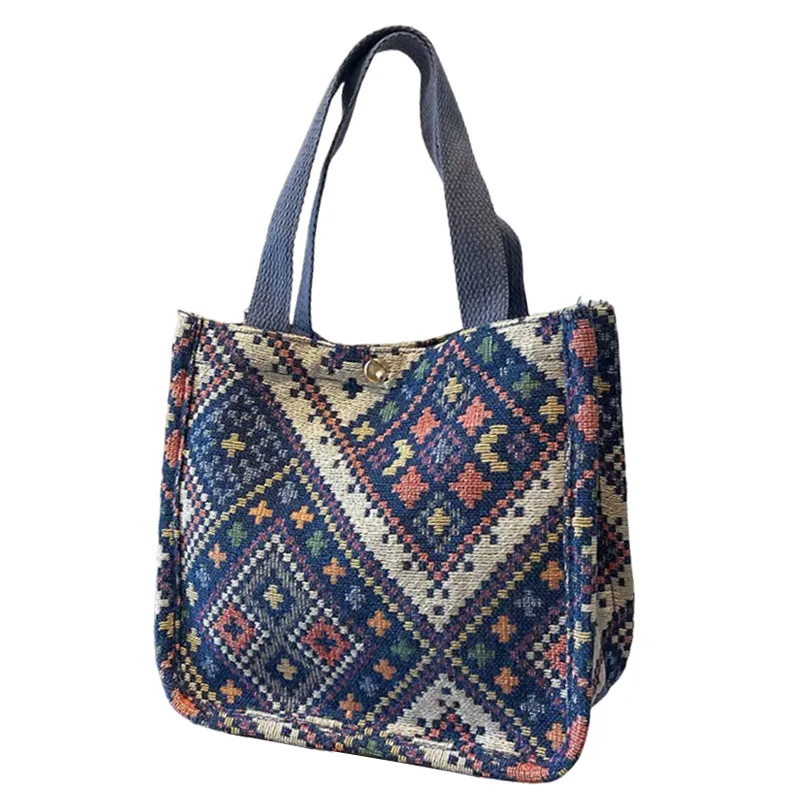 From the perspective of the supply chain, in 2023, 60% of the world's major textile enterprises included eco-friendly tote bags in their ESG assessment indicators, driving the proportion of suppliers purchasing organic cotton to increase from 35% in 2022 to 55%. The sales growth rate of third-party certification systems such as the Global Organic Textile Standard certification products has reached 45%, indicating that enterprises' compliance investments can yield market returns. For instance, in its 2023 logistics upgrade, Amazon replaced 5 million regular bags used by its employees with tote bags certified by the OEKO-TEX standard, which is expected to reduce plastic consumption by 800 tons annually. This large-scale application has reduced the production cost of eco-friendly tote bags by 30% compared to five years ago. At the same time, the production cycle has been compressed from 60 days in the traditional mode to 35 days, significantly enhancing the response speed of the green supply chain.
Economic model analysis reveals that for an eco-friendly tote bag priced at 100 yuan, if calculated based on daily usage frequency, the cost per use is only 0.1 yuan, which is far lower than the 0.5 yuan cost per use of a paper bag. According to a study by the Consumer Behavior Lab at New York University, families that own more than three eco-friendly tote bags can reduce their one-time packaging expenses by approximately 300 yuan annually, with a return on investment of 300%. This phenomenon was particularly prominent under inflationary pressure in 2023. For instance, after the consumption tax was raised to 10% in Japan, the repurchase rate of eco-friendly tote bags increased by 25%, demonstrating their dual advantages of economy and sustainability. These data jointly confirm that eco-friendly tote bags have become an important connection point between personal consumption behavior and corporate social responsibility. Its market share of 55% is expected to exceed the 60% critical point in 2024, marking a complete transformation of mainstream consumption culture.
From the perspective of the supply chain, in 2023, 60% of the world's major textile enterprises included eco-friendly tote bags in their ESG assessment indicators, driving the proportion of suppliers purchasing organic cotton to increase from 35% in 2022 to 55%. The sales growth rate of third-party certification systems such as the Global Organic Textile Standard certification products has reached 45%, indicating that enterprises' compliance investments can yield market returns. For instance, in its 2023 logistics upgrade, Amazon replaced 5 million regular bags used by its employees with tote bags certified by the OEKO-TEX standard, which is expected to reduce plastic consumption by 800 tons annually. This large-scale application has reduced the production cost of eco-friendly tote bags by 30% compared to five years ago. At the same time, the production cycle has been compressed from 60 days in the traditional mode to 35 days, significantly enhancing the response speed of the green supply chain.
Economic model analysis reveals that for an eco-friendly tote bag priced at 100 yuan, if calculated based on daily usage frequency, the cost per use is only 0.1 yuan, which is far lower than the 0.5 yuan cost per use of a paper bag. According to a study by the Consumer Behavior Lab at New York University, families that own more than three eco-friendly tote bags can reduce their one-time packaging expenses by approximately 300 yuan annually, with a return on investment of 300%. This phenomenon was particularly prominent under inflationary pressure in 2023. For instance, after the consumption tax was raised to 10% in Japan, the repurchase rate of eco-friendly tote bags increased by 25%, demonstrating their dual advantages of economy and sustainability. These data jointly confirm that eco-friendly tote bags have become an important connection point between personal consumption behavior and corporate social responsibility. Its market share of 55% is expected to exceed the 60% critical point in 2024, marking a complete transformation of mainstream consumption culture.
From the perspective of the supply chain, in 2023, 60% of the world's major textile enterprises included eco-friendly tote bags in their ESG assessment indicators, driving the proportion of suppliers purchasing organic cotton to increase from 35% in 2022 to 55%. The sales growth rate of third-party certification systems such as the Global Organic Textile Standard certification products has reached 45%, indicating that enterprises' compliance investments can yield market returns. For instance, in its 2023 logistics upgrade, Amazon replaced 5 million regular bags used by its employees with tote bags certified by the OEKO-TEX standard, which is expected to reduce plastic consumption by 800 tons annually. This large-scale application has reduced the production cost of eco-friendly tote bags by 30% compared to five years ago. At the same time, the production cycle has been compressed from 60 days in the traditional mode to 35 days, significantly enhancing the response speed of the green supply chain.
Economic model analysis reveals that for an eco-friendly tote bag priced at 100 yuan, if calculated based on daily usage frequency, the cost per use is only 0.1 yuan, which is far lower than the 0.5 yuan cost per use of a paper bag. According to a study by the Consumer Behavior Lab at New York University, families that own more than three eco-friendly tote bags can reduce their one-time packaging expenses by approximately 300 yuan annually, with a return on investment of 300%. This phenomenon was particularly prominent under inflationary pressure in 2023. For instance, after the consumption tax was raised to 10% in Japan, the repurchase rate of eco-friendly tote bags increased by 25%, demonstrating their dual advantages of economy and sustainability. These data jointly confirm that eco-friendly tote bags have become an important connection point between personal consumption behavior and corporate social responsibility. Its market share of 55% is expected to exceed the 60% critical point in 2024, marking a complete transformation of mainstream consumption culture.
Ready to turn this into pipeline?
Book a 30-minute paid strategy audit with a senior strategist. We'll map your current spend, find the leaks, and model the 90-day lift.
Get My Free Strategy Audit